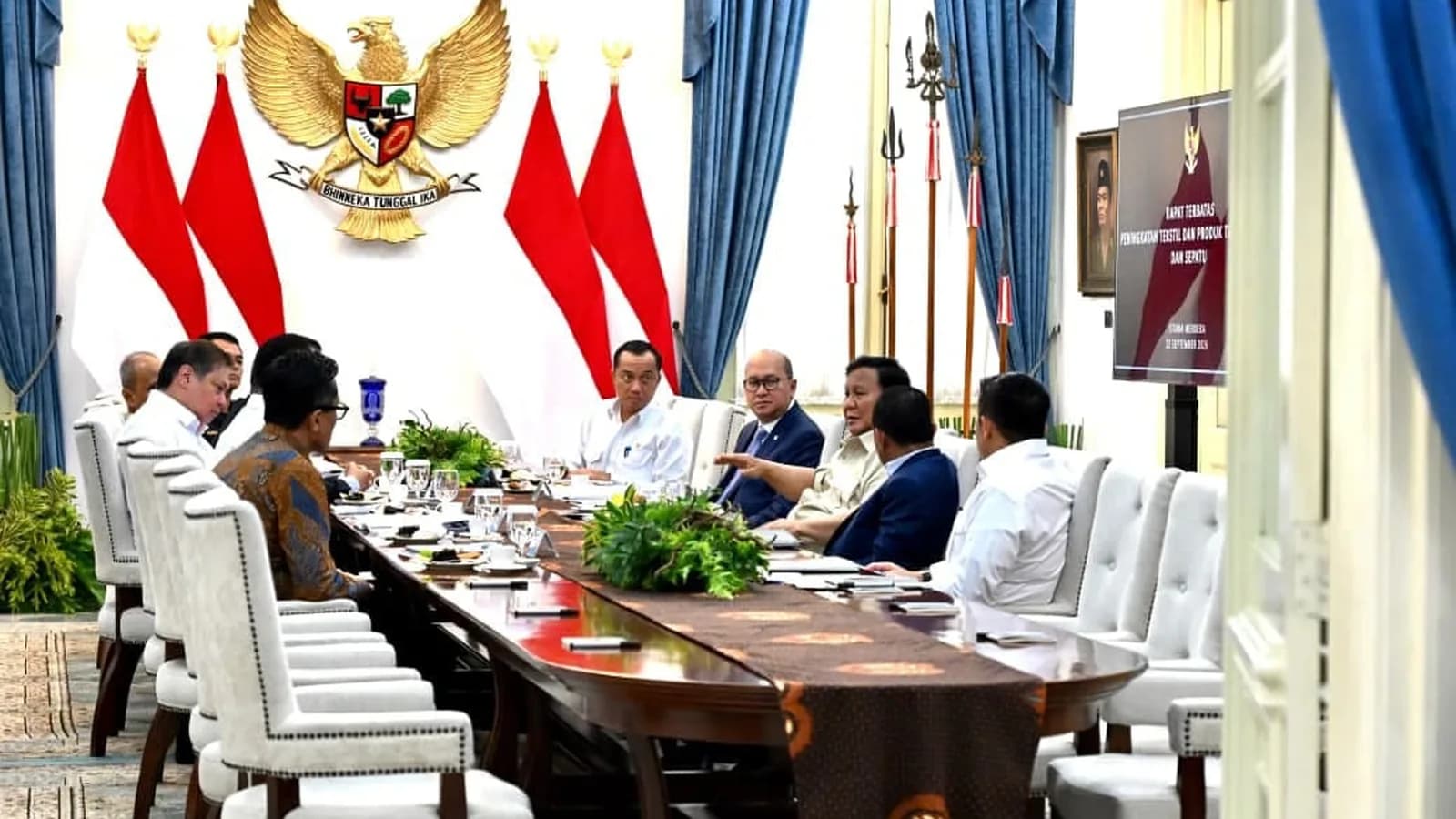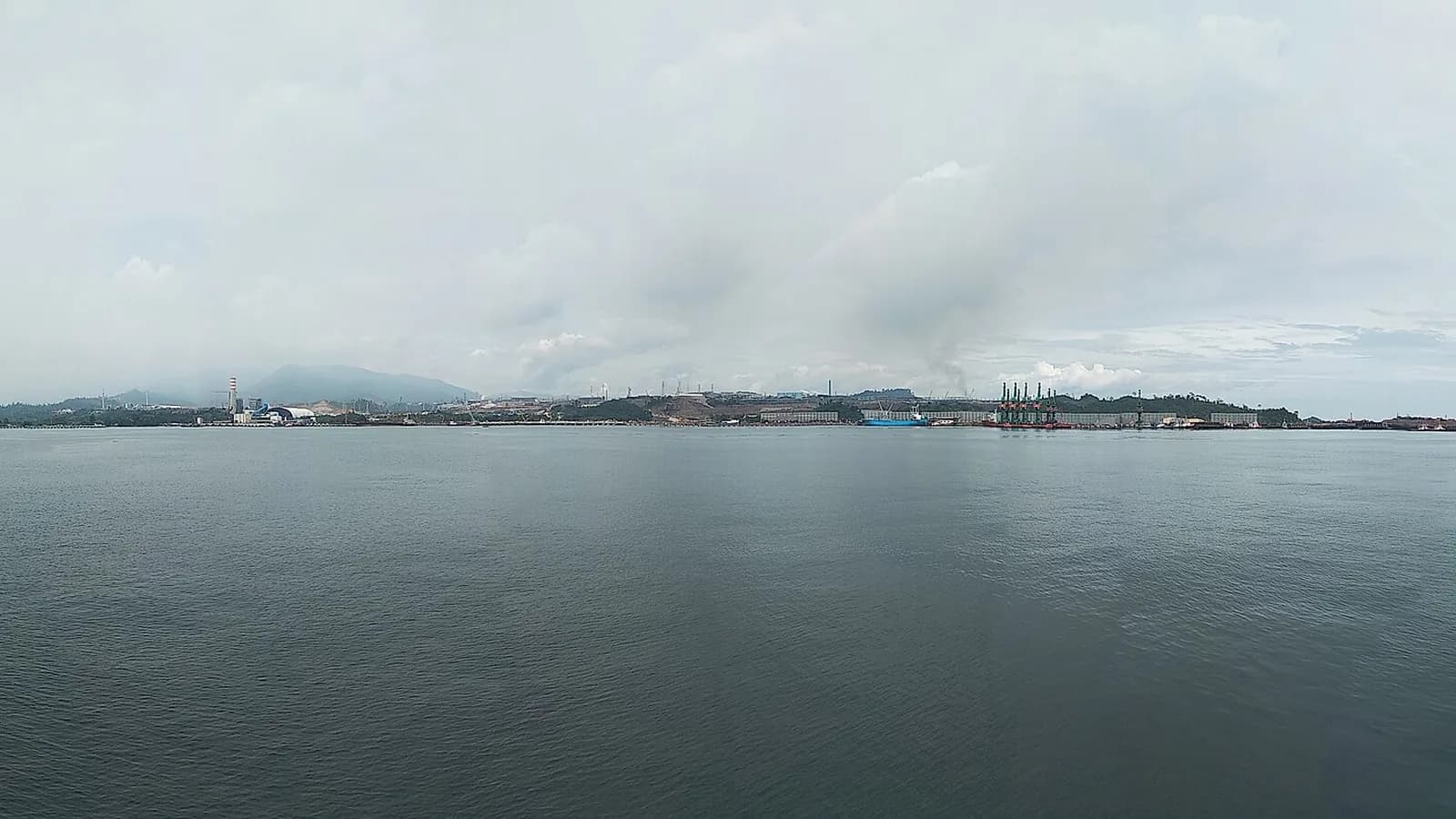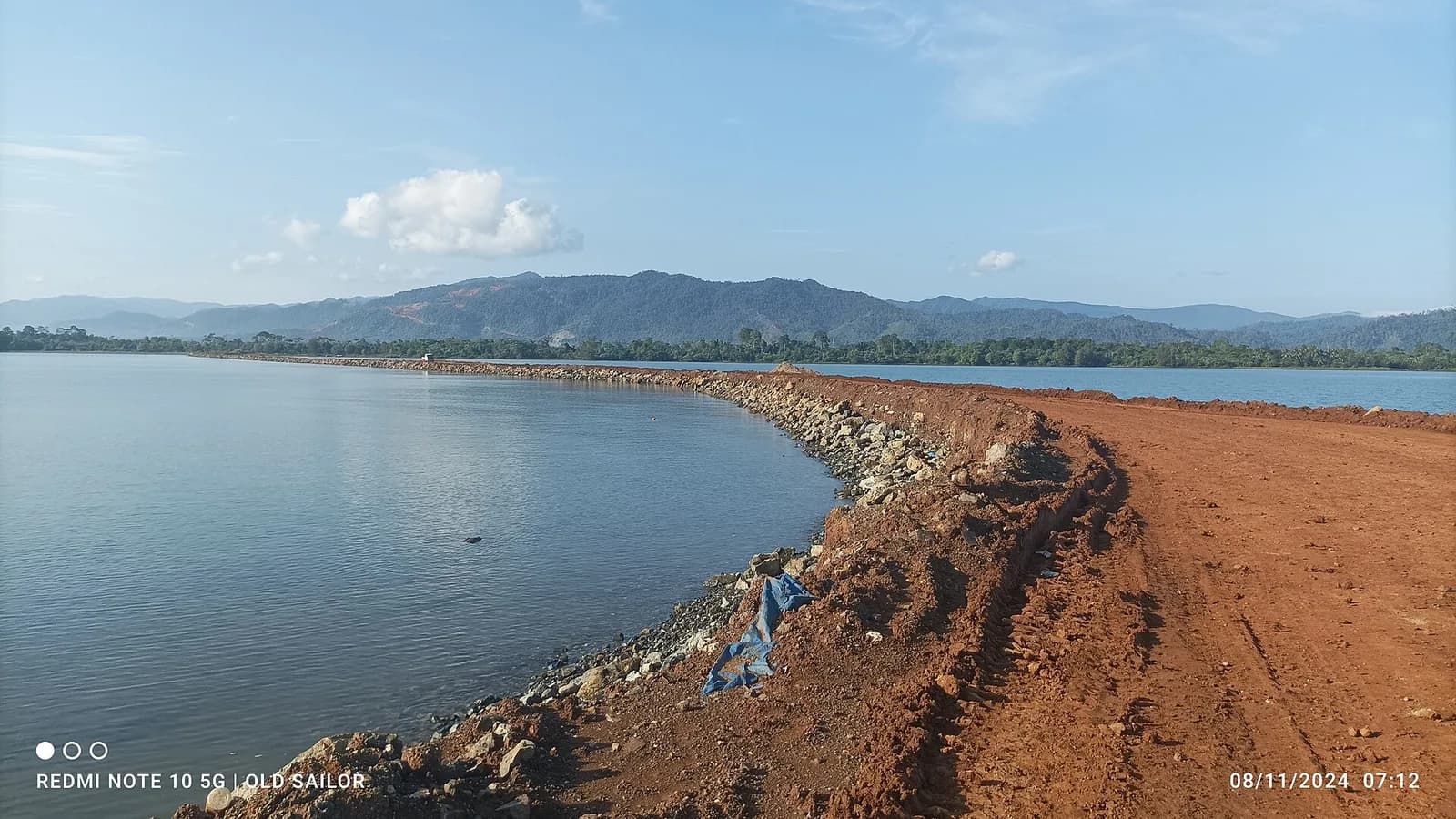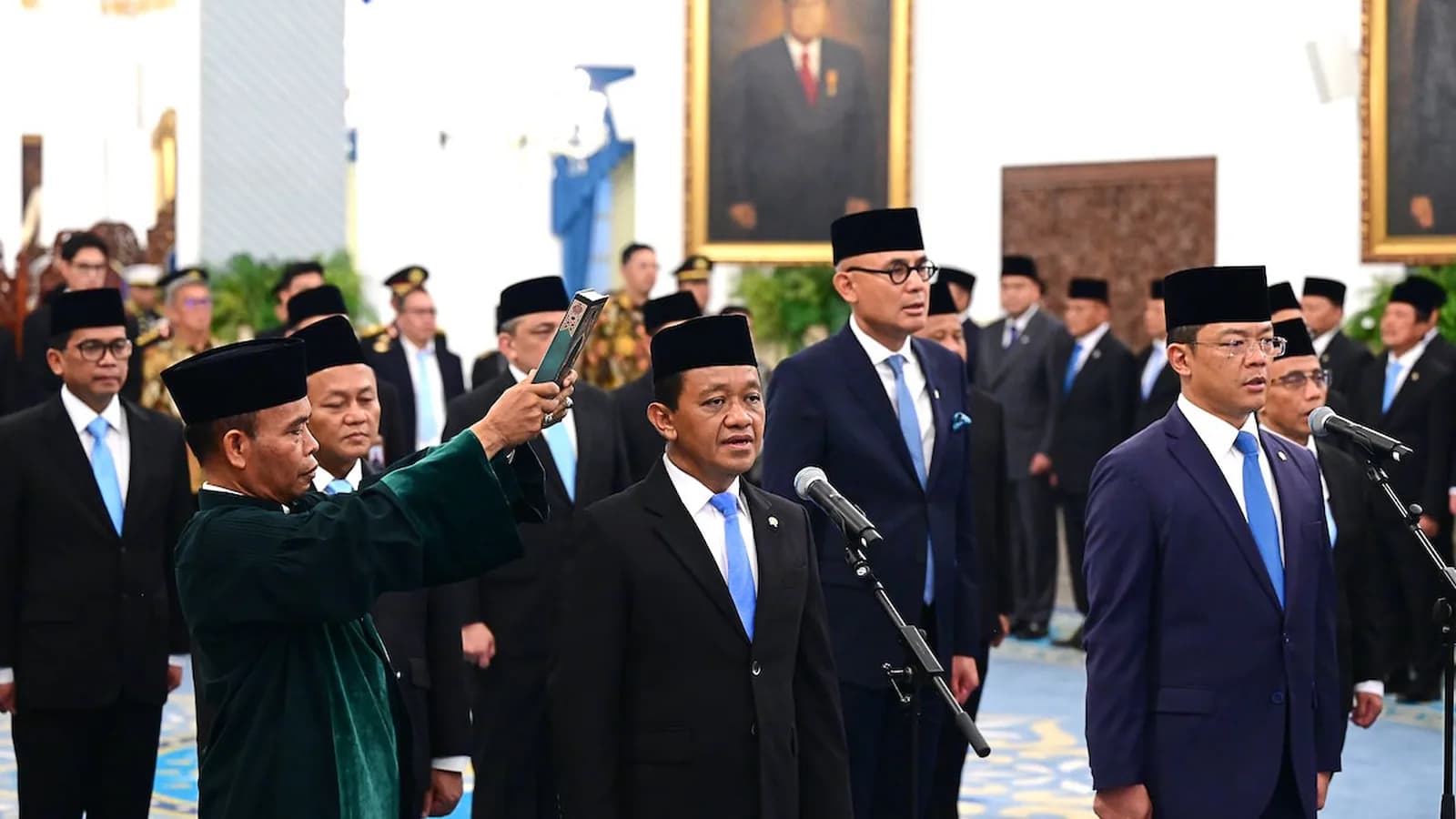
Indonesia's mineral policy has a new phase and a new ministry, and the two arrived within a day of each other. On 30 September 2026, at the International Critical Minerals and Metals Summit (ICMMS) in Bali, the Investment and Downstreaming Ministry set out what it calls the second phase of the country's downstreaming programme. On 1 October, President Prabowo Subianto placed downstreaming and the energy transition under a single coordinating ministry and swore in Bahlil Lahadalia to lead it.
For an investor the two events answer different questions. The summit said where the government wants capital to go; the coordinating ministry says who will be accountable for it.
What phase two is, in the government's words
Heldy Satrya Putera, Deputy for Strategic Investment Downstreaming at the Ministry of Investment and Downstreaming (BKPM), described the shift at ICMMS on the Wednesday:
"Our priority now is to enter the second phase, namely expanding development into the electric vehicle battery industry, battery energy storage systems, as well as other high-value manufacturing." — Heldy Satrya Putera, ICMMS Indonesia 2026, 30 September 2026.
The first phase, on the same account, was the build-out of domestic processing — the refineries and smelters that turn Indonesian ore into a tradeable intermediate. Phase two is the step above that: the products Heldy grouped as the EV battery industry, energy storage and high value-added manufacturing. The government's stated aim is to strengthen competitiveness, draw in longer-term capital, and lift domestic industry into global supply chains rather than stopping at feedstock.
Underpinning the phase is a downstream industry development roadmap the ministry has prepared, covering 28 strategic commodities. The total investment the roadmap is estimated to need is US$618.1 billion (Rp10,976.2 trillion) through 2040, with the mineral and coal sector named as one of the largest contributors.
ICMMS itself, held in Bali from 27 to 30 September 2026 with the price-reporting agency Fastmarkets, was where the technical case was argued. The topics reported from it were the economics of high-pressure acid leach (HPAL) nickel processing, the competitiveness of sulphuric acid production, and the cost structures and technology options for nickel processing in Indonesia. On the battery side, the discussion ranged over precursor and cathode manufacturing and the two chemistries now competing for capacity — nickel-manganese-cobalt (NMC) and lithium iron phosphate (LFP).
What the roadmap flags as the constraints
The ministry did not present phase two as a permitting question alone. According to the reporting from the summit, the priorities it named for critical minerals were:
- certainty of raw-material supply;
- efficiency of processing costs;
- transparent price formation;
- availability of buyers; and
- compliance with global standards.
The reporting adds a further condition: progress into precursors and cathodes depends on more than raw-material availability. It also needs technological readiness, product-quality assurance, market certainty and project economics for Indonesian products to stay competitive in the global EV supply chain. That is a description of where the risk sits, and it is worth reading as the government's own checklist for a project it would back.
The money already moving
The phase-two push sits on capital that has already been counted. Realised downstream investment in the first half of 2026 reached Rp300.1 trillion, or roughly US$16.9 billion, which the ministry puts at 29.7 percent of total national investment for the period and a 6.9 percent increase year on year. The split was:
| Investor type | H1 2026 realised | Share |
|---|---|---|
| Foreign direct investment | Rp212.8 trillion | 70.9 percent |
| Domestic direct investment | Rp87.3 trillion | 29.1 percent |
The two English reports of the same press briefing differ slightly in their dollar conversions — about US$16.86 billion and US$16.91 billion for the rupiah total, and about US$11.96–11.99 billion for the FDI line — because they applied different exchange rates. The rupiah figures are identical across both.
One office for downstreaming and the transition
The institutional change came the next morning. President Prabowo Subianto inaugurated Bahlil Lahadalia — until then the Minister of Energy and Mineral Resources — as Coordinating Minister for Downstreaming and Energy Transition at the State Palace in Jakarta on Thursday, 1 October 2026. Bahlil retains the ESDM portfolio concurrently, and the new coordinating ministry's office stays at the Ministry of Energy and Mineral Resources.
The appointment rests on Keputusan Presiden (Presidential Decree) No. 104/P of 2026 on the dismissal and appointment of ministers and deputy ministers of the Red and White Cabinet for 2024–2029, as recorded by the Ministry of Energy and Mineral Resources. The ministry stated that pooling the two agendas under one coordination aims at two targets: raising the domestic value added of natural resources, and strengthening national energy resilience and self-sufficiency.
The coordination is presented as a continuation rather than a new start. Bahlil had previously led the Task Force for the Acceleration of Downstreaming and National Energy Resilience, which prepared priority downstream projects before implementation; in March 2026 he was also appointed to chair the Task Force for the Acceleration of the Energy Transition, to speed up renewable deployment including solar power.
In remarks carried by the state news agency, Bahlil framed the change around where investment already concentrates:
"Our focus is on downstreaming, with 90 percent of total investment concentrated in the energy and mineral resources sector." — Bahlil Lahadalia, 1 October 2026.
He also tied the timing to geopolitics, citing uncertainty in global energy supply and the parallel pressure to move to cleaner energy, and said the effort has to be comprehensive and measurable rather than handled piece by piece. What is not yet settled is the ministry's scope: Bahlil said the list of ministries and agencies under the coordinating ministry would be clarified through the relevant presidential regulation, which he was still awaiting.
Timeline
| Date | Development |
|---|---|
| 27–30 Sep 2026 | ICMMS Indonesia 2026 held in Bali with Fastmarkets; HPAL economics, nickel processing costs, NMC and LFP capacity discussed |
| 30 Sep 2026 | Ministry of Investment and Downstreaming sets out phase two at ICMMS: EV batteries, BESS, high-value manufacturing |
| 1 Oct 2026 | President Prabowo inaugurates Bahlil Lahadalia as Coordinating Minister for Downstreaming and Energy Transition (Keppres 104/P/2026), retaining ESDM |
| Pending | Presidential regulation defining the coordinating ministry's scope and the agencies under it |
What it means for an international investor
- The target has moved up the value chain. Phase one rewarded whoever built a smelter or refinery. Phase two names the products above that — battery cells and packs, storage systems, higher-value manufacturing — and a roadmap of 28 commodities. A project that ends at an intermediate is no longer the frontier the ministry is describing.
- There is now a single coordination point. With downstreaming and the energy transition under one coordinating minister who also holds the ESDM portfolio, the policy signal and the mining regulator sit in the same office. That cuts across the split an investor usually has to manage.
- The constraints named are the diligence list. Raw-material certainty, processing-cost efficiency, transparent pricing, buyer availability and global-standards compliance are, in effect, the five questions a phase-two project will be measured against. Offtake and cost structure matter as much as the resource.
- The scope is not yet legally fixed. The coordinating ministry's authority over specific ministries and agencies depends on a presidential regulation still to be issued. Treat the current arrangement as a direction of travel with the paper still to come.
- The capital is largely private. More than two-thirds of realised downstream investment in H1 2026 was foreign direct investment, which is the clearest evidence that the model already depends on outside capital as much as on state projects.
Catatan Teramine
*This section is Teramine's editorial assessment, not a fact reported from any source, and not investment advice.*
The interesting thing about phase two is what it is not. It is not a new export ban or a new processing target; the instruments that force ore onshore are already in place and are described elsewhere on this site. Phase two is a statement about where the next unit of capital should land, and the coordinating ministry is the machinery to make one office answer for it. Read together, the message to a foreign investor is narrower and more demanding than phase one's: the government is no longer asking whether you will build a smelter, it is asking whether your project has an ore source, a cost structure, a buyer and a standard it can underwrite.
That is a higher bar, and the roadmap's own numbers suggest why the state wants to set it. A US$618.1 billion requirement through 2040 is not a figure any government budget carries; it is a target that only works if private capital, most of it foreign, keeps arriving at the recent pace. The 70.9 percent FDI share in the first half of 2026 is the proof of concept — and the exposure. If the policy is meant to de-risk that inflow, defining the coordinating ministry's powers, and being clear about which commodities and which links of the chain it will actually prioritise, is the part still outstanding. Until the implementing regulation lands, the phase-two roadmap is a credible direction with a soft institutional edge.
We handle the licence and permit work behind an Indonesian mining or processing project — IUP and IUPK applications, RKAB, and the operating documents a project must hold — through [mining permit services](/en/layanan-izin). Mining and processing opportunities offered for take over, joint operation and joint venture, each with its commodity, location and scheme stated, are listed on the [mining marketplace](/en/marketplace).
Related reading on this site: [Indonesia's mineral downstreaming, commodity by commodity](/en/news/indonesia-mineral-processing-downstreaming) for the processing capacity built in phase one; [critical minerals in Indonesia](/en/news/critical-minerals-in-indonesia) for the commodity list; [nickel smelters in Indonesia](/en/news/nickel-smelter-indonesia) for the fleet behind the battery chain; [Indonesia's mineral export ban](/en/news/indonesia-mineral-export-ban) for the instruments that force processing onshore; and [IEU-CEPA](/en/news/ieu-cepa-indonesia-eu-mining-investment) for the trade channel opening toward European capital.
What this article does not establish
- The full text of the 28-commodity roadmap. The figures cited are the ministry's, as reported by ANTARA and Indonesia Business Post; the underlying roadmap document was not read for this article.
- Which commodities the second phase prioritises, or the investment split per commodity. No breakdown was read.
- The exact scope and legal powers of the coordinating ministry. Bahlil said the defining presidential regulation was still awaited; no draft was read.
- Any figure on how much of the H1 2026 total went to nickel, batteries or any single commodity. The reporting gives a sector total of 29.7 percent of national investment, not a commodity split.
- The precise US dollar equivalents. The two outlets' conversions differ slightly; the rupiah figures are the ones both state identically.
- Any projection of how much of the US$618.1 billion will actually be realised, or by whom. The roadmap figure is a stated requirement, not a commitment.
Sources
- Ministry of Energy and Mineral Resources (Kementerian ESDM) — "Hilirisasi dan Transisi Energi Dikoordinasikan Satu Pintu, Bahlil Dilantik sebagai Menko", 1 October 2026. Used for: the inauguration of Bahlil Lahadalia as Coordinating Minister for Downstreaming and Energy Transition at the State Palace on 1 October 2026; the legal basis in Presidential Decree No. 104/P of 2026 on the dismissal and appointment of Red and White Cabinet ministers and deputy ministers for 2024–2029; Bahlil's retention of the ESDM portfolio; the two stated targets (domestic value added and national energy resilience); and his earlier roles leading the Downstreaming and National Energy Resilience Task Force and, from March 2026, the Energy Transition Acceleration Task Force.
- ANTARA News (English) — "Indonesia targets EV battery, BESS expansion in phase 2 downstream", 30 September 2026, 21:36 WIB. Used for: Heldy Satrya Putera's statement setting out the second phase; the 28 core commodities and the US$618.1 billion investment requirement to 2040; the first-half 2026 downstream investment realisation of Rp300.1 trillion, its 29.7 percent share of national investment and 6.9 percent year-on-year increase; the FDI and domestic split; and the ICMMS Indonesia 2026 dates and its partnership with Fastmarkets.
- ANTARA News (English) — "Indonesia forms new ministry to speed up downstreaming, Bahlil says", 1 October 2026, 19:39 WIB. Used for: Bahlil's remarks after inauguration; the coordinating ministry's office remaining at the ESDM; the quotation on downstreaming and 90 percent of investment concentrating in the energy and mineral resources sector; and his statement that the presidential regulation defining the ministry's scope was still awaited.
- Indonesia Business Post — "Indonesia enters second phase of downstreaming with EV battery push", 30 September 2026. Used for: the direct quotation from Heldy Satrya Putera at ICMMS; the roadmap's 28 strategic commodities and the US$618.1 billion (Rp10,976.2 trillion) requirement through 2040; the H1 2026 investment figures and FDI/domestic split; the critical-minerals priorities of raw-material certainty, processing-cost efficiency, transparent price formation, buyer availability and global-standards compliance; and the discussion of HPAL economics, precursor and cathode manufacturing, and NMC and LFP chemistries.