The Indonesia–European Union Comprehensive Economic Partnership Agreement (IEU-CEPA) has moved out of negotiation and into the approval stage, and the clock running behind it is a tariff deadline: Indonesia loses its preferential access to the EU market when the bloc's Generalized Scheme of Preferences (GSP) ends on 1 January 2027. For a mining or mineral-processing investor, the agreement matters far less for the duty lines on palm oil or furniture than for the investment agenda — the sectors Jakarta is steering European capital toward sit directly on the downstream nickel, battery and critical-minerals value chain.
Where the deal stands
The roadmap below is put together from Indonesian government briefings and the English-language coverage of them. The EU's own texts were not accessible from this desk, so each step is attributed to the outlet that reported it.
| Date | Development |
|---|---|
| 3 Jul 2026 | The European Commission submits a conclusion proposal to the EU Council, covering IEU-CEPA and a separate Investment Protection Agreement (IPA) |
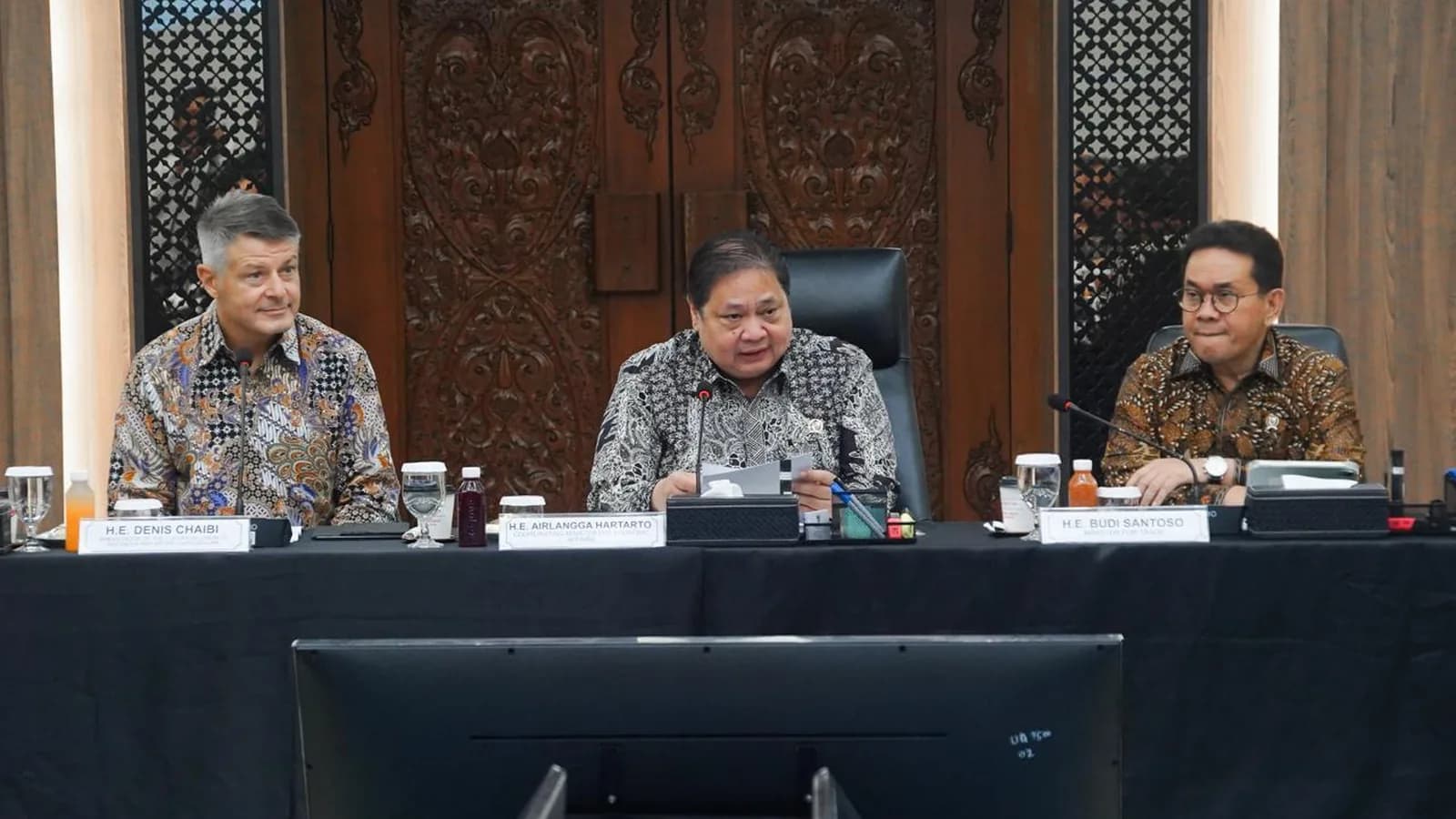
| 21 Aug 2026 | Government–EU high-level dialogue in Jakarta; Coordinating Minister Airlangga Hartarto calls IEU-CEPA a "game changer" and names the sectors offered to EU investors |
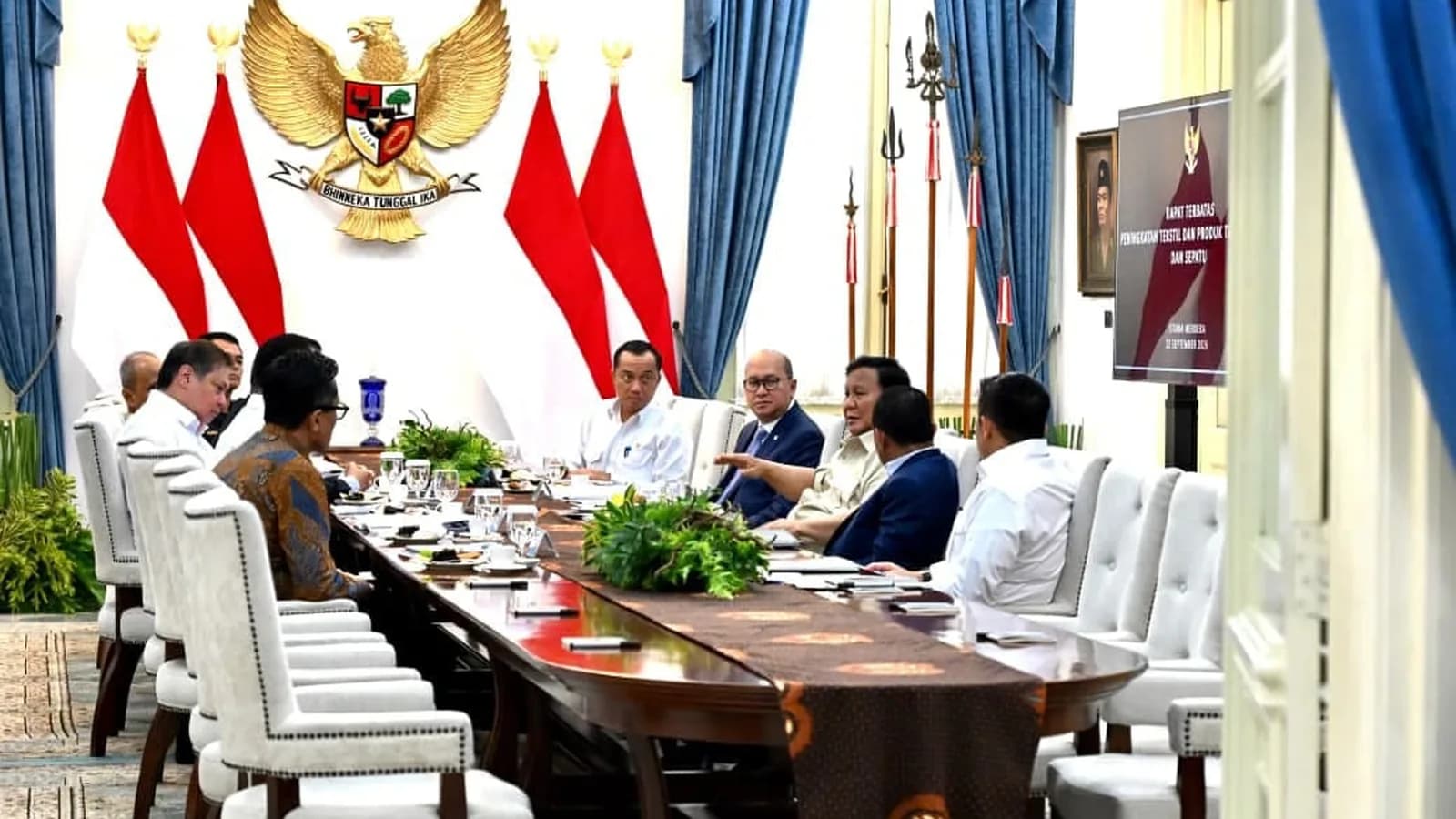
| 22 Sep 2026 | President Prabowo Subianto instructs his cabinet to expedite the pact, at the Presidential Palace |
| Sep 2026 | Negotiators finalise the English text for the European Parliament; the Parliament lists the agreement in its preparatory phase |
| 1 Jan 2027 | Indonesia leaves the EU's GSP; preferential access ends |
| Early 2027 (target) | Implementation |
Two procedural details matter for timing. First, Indonesia asked Brussels to process the agreement in English alone, rather than the EU's usual three-language format (English, French, German), to compress the schedule. Second, on the Indonesian side the government intends to use a Peraturan Presiden (presidential regulation) to move ratification through the House of Representatives (DPR), after the Trade Minister consulted the legislature; the government expects that route to be faster than starting from a new law.
Once the text is signed it still needs the EU's internal steps — signature and consent of the European Parliament — while Indonesia completes its own ratification. Only then can the agreement enter into force.
The tariff arithmetic
The headline number depends on which side is briefing. Airlangga put Indonesia's market access at 90.4% of tariff lines going straight to zero, with a further 8.37% reduced gradually, in remarks delivered after a dialogue with the EU delegation and member-state ambassadors. ANTARA, reporting the same round, rendered the figure as "90 percent." ANTARA's English service, reporting the Commission's proposal, said the EU would eliminate import duties on 98.5% of tariff lines.
Either way, the duty relief is concentrated in goods Indonesia already ships — palm oil, footwear, coffee, furniture, agriculture and fisheries, and telecommunications — not in minerals, whose trade is governed by Indonesia's own export and processing rules rather than by EU tariffs. The part of IEU-CEPA that touches mining is the investment agenda beneath the tariff schedule.
What the deal changes for critical-minerals investment
Indonesia is not offering Europe open access to ore; it is inviting European capital into the processing and manufacturing layer it wants built at home. In the Jakarta dialogue, Airlangga listed the sectors Indonesia welcomes EU investment in: electric-vehicle and battery ecosystems, renewable energy, the digital industry, advanced manufacturing, critical-mineral processing, water management and sustainable infrastructure. Reporting of the same remarks adds renewable energy, digital, cybersecurity, agriculture, manufacturing, innovation and technology, as well as electric vehicles, electronics and pharmacy.
The framing is deliberate. Indonesia couples the investment opening to downstreaming, technology transfer and workforce development, with explicit reference to critical-mineral and energy supply chains. That is the same bargain the state has struck across its nickel policy — capital and technology in, processing capacity out — extended to a partner that is itself trying to diversify its supply of critical raw materials.
The existing European footprint is modest against that ambition but not trivial: the government put EU investment in Indonesia over the past five years at USD13.6 billion, supporting more than 245,000 jobs, and the EU Ambassador to Indonesia, Denis Chaibi, said the bloc wants to diversify its commercial partnerships. German and French business delegations have already visited to scout the opening, according to the same briefings.
The deadline doing the work
What forces the pace is not enthusiasm but the GSP cliff edge. The EU confirmed Indonesia will leave the scheme on 1 January 2027, after Indonesia was classified as an upper-middle-income country for three consecutive years. Losing GSP restores duties on a range of Indonesian exports to the bloc, and IEU-CEPA is the instrument meant to replace that access before it lapses. That is why the September instruction from President Prabowo was to expedite, not merely to continue.
What to watch
- Signature, targeted for October 2026, then EU Council approval and European Parliament consent. The Parliament still lists the file as preparatory.
- The IPA is separate. The Investment Protection Agreement was submitted alongside IEU-CEPA and needs its own approval; investors weighing dispute-settlement protection should track it as its own instrument.
- Ratification is not entry into force. The working target is ratification in the second half of 2026 and implementation in early 2027; the date that binds an investor is entry into force, not signature.
- Sector openings are not project terms. IEU-CEPA governs market access; it does not change Indonesia's licensing regime, local-content rules or divestment obligations, which remain deal-level questions.
Catatan Teramine
*This section is editorial assessment, not fact.*
IEU-CEPA is best read as a demand-side signal rather than a mining rulebook. The tariffs it liberalises are agricultural and light-manufacturing tariffs; the mineral trade that dominates Indonesian export value is shaped by Jakarta's ban-and-process policy, not by Brussels. What the agreement genuinely changes for an international investor is the direction of the investment conversation: it gives European industrial capital — including the battery, chemicals and equipment firms that supply the downstream chain — a formal reason to look at Indonesia, and it gives Jakarta a ratification deadline its own bureaucracy has struggled to generate internally.
The caution is that a trade agreement is not a permit. The GSP expiry is a hard date; the IEU-CEPA schedule is a target, and the file is still in the European Parliament's preparatory phase. An investor should treat the sector list as an invitation to diligence, not as a change in the rules that govern a licence. For the regulatory parts of that diligence — the mining permit, the processing licence, the local-content and divestment tests — the reference pages below are the place to start.
Related reading on Teramine:
- [Critical minerals in Indonesia: 47 on the list, three at world scale](/en/news/critical-minerals-in-indonesia)
- [Indonesia's mineral downstreaming, commodity by commodity](/en/news/indonesia-mineral-processing-downstreaming)
- [Foreign ownership in Indonesian mining](/en/news/foreign-ownership-indonesian-mining)
- For projects and assets open to partners, see the [Teramine marketplace](/en/marketplace).