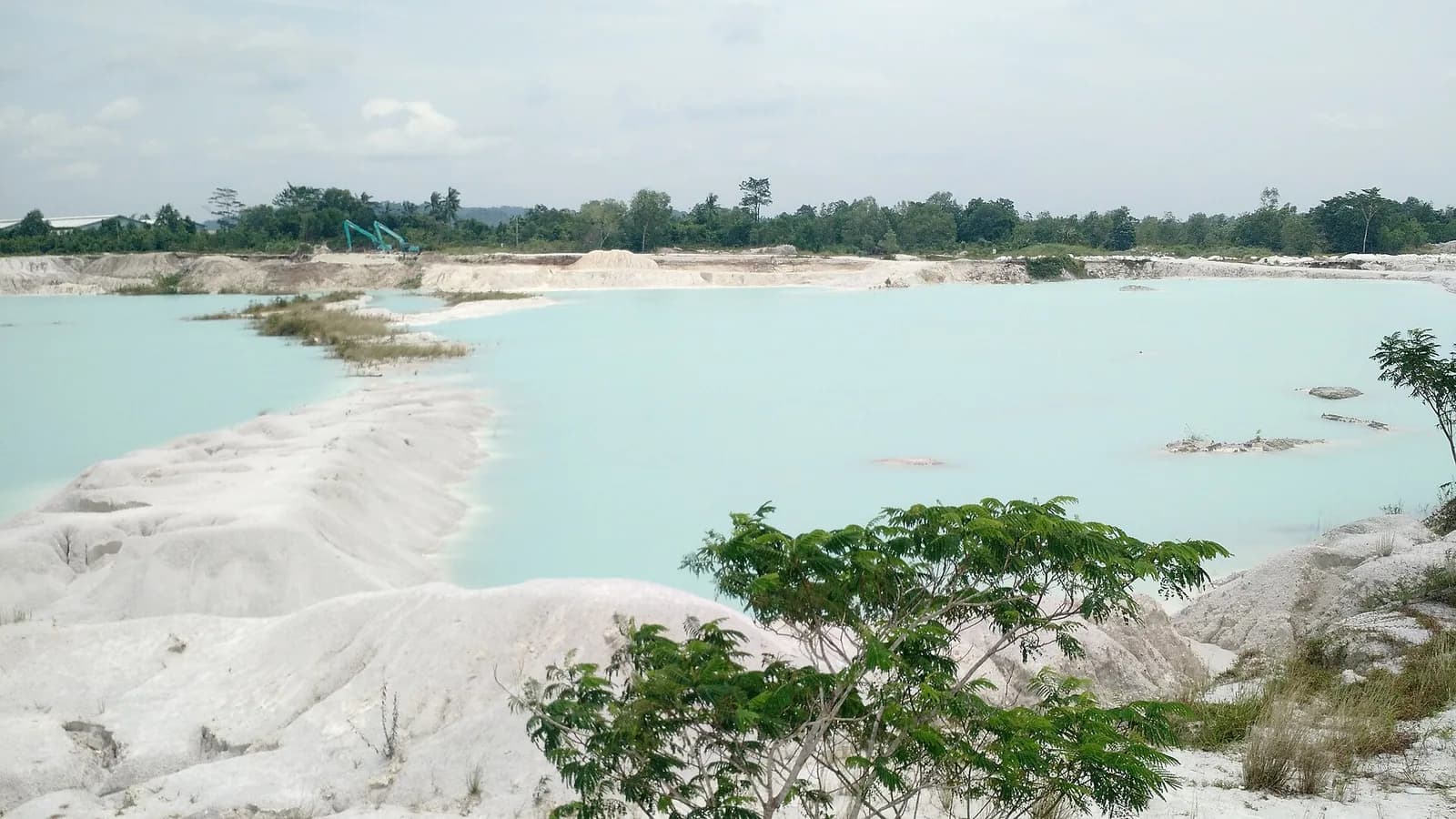
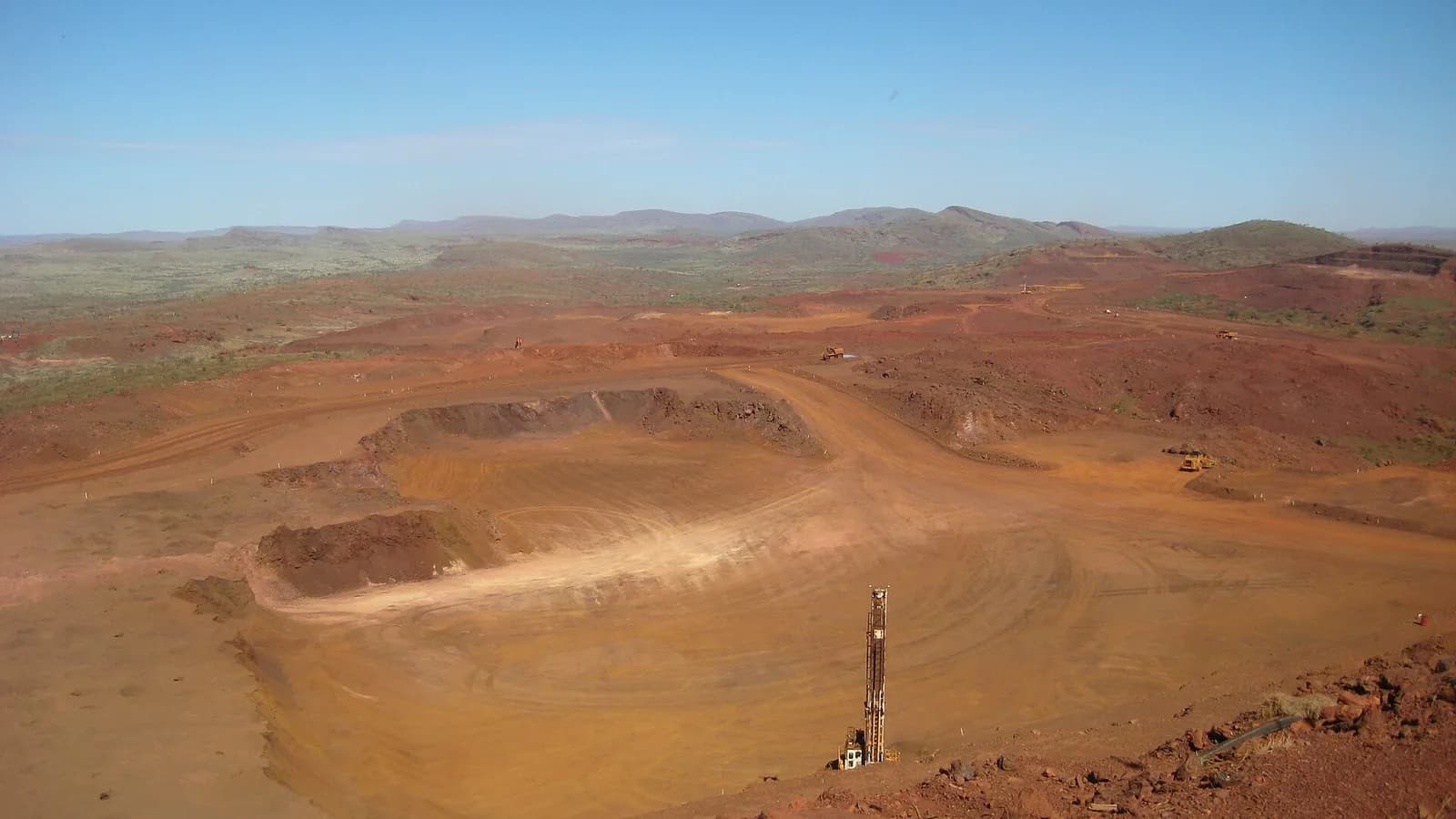
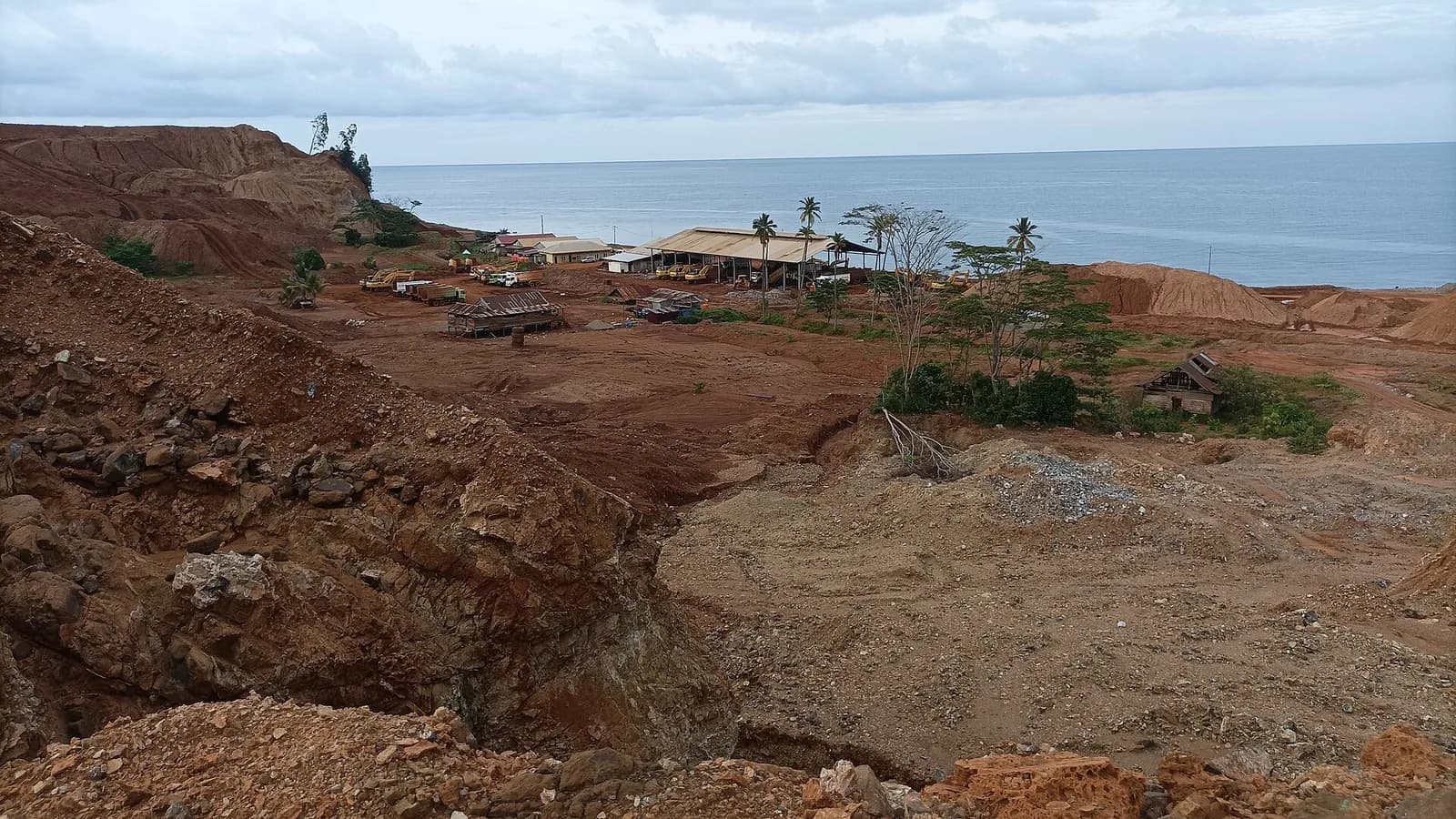
Indonesia's mining permit is a right to mine and a set of environmental duties that follow the ore from the pit to the place its residue is stored. On tailings, the two meet. A tailings storage facility is an engineering structure, but in Indonesia it is also a rulebook obligation whose design, operation, monitoring and eventual reclamation are prescribed — and whose breach is a licence risk before it is an environmental one.
This explainer sets out what the rulebook requires of an IUP or IUPK holder: where the rules sit, how the environmental duty is anchored, how a tailings facility must be built and run, the water and monitoring obligations around it, what has to happen to it at closure, and how a breach is enforced. Every rule, date and instrument below is taken from the primary texts — the ministerial regulation and decree on good mining practice — not from secondary summaries.
Where the rules sit
| Instrument | Date | Its role here |
|---|---|---|
| Ministerial Regulation (Permen) ESDM No. 26 of 2018 | 3 May 2018 (State Gazette 2018 No. 596) | the operative regulation on good mining practice: it requires permit holders to carry out environmental management and anchors that duty to the project's own environmental document (Article 20) |
| Ministerial Decree (Kepmen) ESDM No. 1827 K/30/MEM/2018 | 7 May 2018 | the implementing guideline — Annex V is the environmental-management guideline (*Pedoman Pelaksanaan Pengelolaan Lingkungan Hidup Pertambangan Mineral dan Batubara*); Annex VI carries the reclamation and post-mining plan |
| Government Regulation (PP) No. 96 of 2021 | 9 September 2021 (State Gazette 2021 No. 208) | the government regulation implementing mineral and coal mining business; amended by PP No. 25 of 2024 (30 May 2024) and again by PP No. 39 of 2025 |
Status matters, because these are not new instruments. The state's legal database records Permen 26/2018 as revoking earlier safety rules and records no revocation or amendment of Permen 26/2018 itself. It records Kepmen 1827/2018 as partially revoked — but only as to a single provision: the rule on reopening areas that have already been reclaimed, in *Annex VI, section D.4.b.2*, revoked by Kepmen ESDM No. 111.K/MB.01/MEM.B/2024 (21 May 2024). The environmental-management Annex V is untouched.
The duty runs to the project's own environmental document
Article 20 of Permen 26/2018 requires every IUP Eksplorasi, IUPK Eksplorasi, IUP Operasi Produksi and IUPK Operasi Produksi holder to carry out environmental management. It defines that duty as two things: carrying out management *and* monitoring in line with the Dokumen Lingkungan Hidup — the project's AMDAL or UKL-UPL environmental document — and controlling and restoring the environment where pollution or damage occurs. Article 21 imposes the same on a permit holder whose business is only processing and/or refining, together with post-operation duties.
The point is worth stating plainly: there is no single national tailings figure to design to. The performance standard a holder is measured against is the one written into its own environmental document, and the regulation points back to that document repeatedly.
How a tailings facility must be built and run
Annex V, section 5, sets the obligations for the processing and refining stage. The load-bearing items are these:
- The storage facility for processing and refining residue must be designed, built and operated to be safe and not to pollute surface water or groundwater, in line with prevailing regulation.
- Where the storage is on land it takes the form of a mine-waste tailings dam — the decree's own term is *"bendungan limbah tambang (tailing)"* — and it must be equipped with an emergency-response system and a structural-failure mitigation plan.
- Residue placed under the sea must be managed in line with prevailing rules.
- Residue that is hazardous and toxic waste (*limbah B3*) follows the hazardous-waste regime; residue carrying radioactive material follows its own rules; and gold-ore processing must not use mercury (Hg).
- A heap-leach facility must be designed and built with rainfall and topography in mind so that leachate cannot flow into public waters, and must be equipped with closed-loop circulation, a liner system, monitoring wells, a perimeter ditch and a safety pond, leak monitoring, and an environmental emergency-response system.
The pattern is a duty of conduct: design it, operate it, and hold a plan for the moment the structure fails.
Water: run-off, mine water and acid mine drainage
Tailings do not sit alone in the rulebook; they sit inside a water-management regime.
- Mine water must be routed through working drainage to a settling pond before it is released, and must meet environmental quality standards before discharge. Surface run-off flowing toward the pit from undisturbed ground must be diverted around it.
- Acid mine drainage starts with a duty to know: the holder must run a geochemical rock study to establish whether acid-forming potential exists. If it does, prevention comes first — managing where waste rock is placed, encapsulation (*dry cover*), submergence (*wet cover*), or blending acid-forming material with non-acid or alkaline material. If drainage still forms, it must be treated — actively, with neutralising agents such as lime or caustic soda, or passively, through wetlands or an open limestone channel — to standard before release.
- A settling pond has its own design conditions: it must be built at a stable location, to a technical design suited to the activity, at a safe distance from rivers, housing, public facilities and farmland. It must carry a device that can stop the outflow to public waters if the discharge exceeds quality standards at the outlet, flow-measurement at the outlet, and a public information board showing the water-quality monitoring results — and it must be maintained periodically.
Monitoring is a listed obligation, not a courtesy
Annex V, section 6, requires the holder to monitor the environment and to set out standard monitoring procedures in line with the environmental document. The list is explicit: surface-water quality, groundwater quality and level, seawater quality, wastewater quality, soil, air, biodiversity, land subsidence, and erosion and sedimentation. The work must be done by competent technical personnel using standard instruments.
Closure has to carry the tailings pond
The end of the mine is planned from the start. Annex VI requires the post-mining plan to describe, for the processing and refining facilities, the dismantling of the plant, the reclamation of former processing sites, the reclamation of former tailings ponds together with their stabilisation, the reclamation of former ore stockpiles, and the remediation of soil contaminated by chemicals, oils and hazardous waste. Permen 26/2018, in turn, requires a reclamation plan and a reclamation guarantee placed with the Minister or governor within their authority.
An environmental breach is a licence ground
The enforcement chain is direct. Under Article 45 the Minister and governors supervise the implementation of good mining practice; under Article 46 a mine inspector (*Inspektur Tambang*) may enter the site at any time and temporarily suspend part or all of the operation where it is judged to endanger worker or public safety or to cause pollution or environmental damage.
A breach of the Article 20 environmental-management duty is expressly listed, in Article 50(1), among the breaches that attract administrative sanctions: a written warning, temporary suspension of part or all of the business activity, and/or revocation of the permit. The clock is fixed — a written warning at most three times, each for a maximum of 30 calendar days; then temporary suspension for up to 60 calendar days; then revocation.
Why it matters for a foreign investor
- Tailings is a licence item, not just a construction item. The duty to keep the facility from polluting water is the same Article 20 obligation that, if breached, reaches the permit.
- The plan is a named deliverable. A structural-failure mitigation plan and an emergency-response system are not optional guidance — they are what the guideline says the onshore tailings facility must be equipped with.
- The environmental document is the standard. Diligence should read the AMDAL or UKL-UPL and test whether the designed facility, the monitoring programme and the closure provision actually match it.
- Closure cost is built in. Because reclamation of the tailings pond and a reclamation guarantee are required, the end-of-life liability is a modelled cost rather than a surprise.
Catatan Teramine
*This section is Teramine's editorial assessment, not a statement from any government body and not a recommendation.*
Read together, these rules describe a duty-of-conduct framework rather than a prescriptive engineering standard. The decree tells a holder to design, build and operate the facility safely, to hold a failure-mitigation plan, to monitor a defined list of parameters, and to reclaim the pond at the end — but the texts we read do not name a specific dam-design standard to build to. That places the weight on the project's own environmental document and on the mine inspectorate, and it makes the regulator's paper trail the thing to test in diligence: does the file show a failure-mitigation plan, a monitoring programme against the parameters above, and a closure provision that actually funds the pond?
The second observation is currency. The operative guideline is from 2018, and the government regulation beneath it has been amended twice since, in 2024 and 2025. A project relying on these duties should confirm the current text before it files rather than assume the 2018 wording is the last word.
What we could not verify
- Any enforcement statistics. We read the sanction articles; we did not find or read data on how often the suspension or revocation powers have been used for an environmental or tailings breach.
- Any named technical dam-design standard. The decree refers to design in line with prevailing regulation and to a failure-mitigation plan; we did not find a named international tailings standard in the texts we read.
- The detailed content of the two amendments. We read PP 96/2021 as originally issued and the titles of PP 25/2024 and PP 39/2025; we did not read the two amending texts article by article.
- Any company, project, reserve or production figure. This article describes rules; it names no operating company and reports no deal.
Sources
Every rule and date below comes from an official text read in full or in the relevant part, downloaded from the legal information database of Indonesia's Ministry of Energy and Mineral Resources (JDIH ESDM).
- Peraturan Menteri ESDM No. 26 of 2018 on the Implementation of Good Mining Practice and Supervision of Mineral and Coal Mining, dated 3 May 2018 (State Gazette 2018 No. 596) — read for Article 20 (environmental-management duty anchored to the environmental document), Article 21 (processing and refining permits), Articles 22 onward (reclamation plan and reclamation guarantee), Article 45 (supervision by the Minister and governors), Article 46 (the mine inspector's right of entry and power to suspend), and Articles 50 to 53 (administrative sanctions, the listing of Article 20(1) among the sanctionable breaches, and the 30-day and 60-day limits).
- Keputusan Menteri ESDM No. 1827 K/30/MEM/2018 on Guidelines for the Implementation of Good Mining Practice, dated 7 May 2018 (370 pages) — read for Annex V (the environmental-management guideline: section 2 on construction, including the settling pond; section 3 on mining, including run-off, mine water and acid mine drainage; section 5 on processing and refining, including the onshore tailings dam, the emergency-response system and structural-failure mitigation plan, submarine placement, hazardous, radioactive and mercury provisions, and heap-leach design; and section 6 on environmental monitoring) and Annex VI (the reclamation and post-mining plan, including reclamation of former tailings ponds and their stabilisation).
- Keputusan Menteri ESDM No. 111.K/MB.01/MEM.B/2024, dated 21 May 2024 — read for the partial revocation it makes to Kepmen 1827/2018, limited to the provision on reopening areas that have already been reclaimed (Annex VI, section D.4.b.2).
- Peraturan Pemerintah No. 96 of 2021 on the Implementation of Mineral and Coal Mining Business, dated 9 September 2021 (State Gazette 2021 No. 208) — the government-regulation framework, recorded as amended by PP No. 25 of 2024 (30 May 2024) and PP No. 39 of 2025.
For the permit, document and compliance work behind this framework — the RKAB package, the environmental-document filings and the reporting — see our [permit services](/en/layanan-izin) page. Mining assets currently listed are on the [mining marketplace](/en/marketplace).
Read this alongside the document that carries the environmental and reclamation budget, [what the RKAB is](/en/news/what-is-rkab-indonesia); the licence framework it sits under, [Indonesia mining law](/en/news/indonesia-mining-law); the end-of-mine obligations, [mine closure in Indonesia](/en/news/mine-closure-in-indonesia); and the wider screening question, [Indonesia mining investment climate](/en/news/indonesia-mining-investment-climate).