Mining is capital-intensive in every jurisdiction. Indonesia adds three constraints that decide how a project is funded and who will lend against it.
The first is that the asset is a permit, not a title. The mining right is granted by the state to a licensed vehicle, and the resource itself is controlled by the state. The second is that the security a lender may take is a closed list fixed by statute, not something the parties can design in a term sheet. The third is that a licence held through foreign investment carries a divestment schedule that begins when the mine starts producing, not when the money is raised.
A financing that ignores any one of those is underwriting a different project from the one that exists. This article sets out how Indonesian mine and processing projects are actually funded — the project company, the lenders, the security package, the offtake structures that turn future production into present capital, and the divestment clock — and closes with the questions a financier will ask before signing.
The structural description below is drawn from the Indonesia chapter of Chambers' Project Finance 2023 guide, contributed by ABNR Counsellors at Law, and from Government Regulation No. 96 of 2021 (PP 96/2021) on the implementation of mineral and coal mining business activities, read in the official text on the Ministry of Energy and Mineral Resources' legal database. A recent nickel-processing financing is used as a worked example. Everything attributed in the text is attributed to the document or report it came from; the diligence framework in the closing section is Teramine's own synthesis and is labelled as analysis.
The asset is a licence, and a foreign investor cannot hold it
Under Indonesian law a private entity does not own natural resources. The ABNR chapter puts it directly: natural resources are "controlled by the state", although a private entity "may use natural resources based on the relevant permit." Owning or operating a mining asset therefore requires a licence — and, the same chapter states, "it is not possible for a foreign entity to hold such a licence; it would need to be done through the establishment of a foreign investment company in Indonesia, which would apply for and be granted such a licence."
That one rule shapes the whole financing. A foreign investor finances an Indonesian project company — typically a PT PMA, a limited liability company established in the framework of foreign investment — which holds the IUP or IUPK. The vehicle, not the foreign parent, is the borrower; the vehicle, not the parent, is the licence holder.
The point carries into the security package. When the ABNR chapter lists the assets a lender typically takes security over, a licence appears only against the words "power of attorney to manage business" — not as a mortgaged asset. A project-finance lender in Indonesia is, in practice, lending against the shares in the licence-holder, its receivables, its accounts and its plant. The permit is what makes those assets worth anything; it is not itself the collateral.
The project company and the capital stack
Indonesian project finance follows the standard shape. Sponsors establish a special purpose vehicle, usually an Indonesian limited liability company, to develop and operate the project: the project company. The ABNR chapter describes local limited liability companies and state-owned enterprises acting as local sponsors, with foreign legal entities or companies as foreign sponsors, jointly forming a local subsidiary that becomes the investment vehicle.
The lenders are a recognised set: export credit agencies, multilateral agencies, commercial banks, and non-bank financial institutions, local and foreign. Debt is "non-recourse or limited recourse" as a rule, combined with equity in the form of paid-up capital or shareholder loans. The chapter records that debt-to-equity ratios vary by sector but sit "typically at a ratio of 75:25", with the debt leg mostly bank loans, offshore or onshore.
The instruments are widening. The same chapter notes that corporate bonds, project bonds and the securitisation of existing project revenues are increasingly used to fund new projects, and names green bonds as a route for sustainable ones. On sector appetite it flags infrastructure, energy and industry — expressly including smelting, electric cars and batteries — as the areas expected to stay most active. That is where Indonesia's downstreaming programme meets the loan market, and it is why a processing plant is now as financeable as a mine.
The security package: what the law allows, not what the parties draft
Indonesian security interests are limited to a closed statutory list. The ABNR chapter describes the permitted in rem security as the mortgage (hak tanggungan) over land, property and other immovable assets; the fiduciary security (fiducia) over movable and intangible assets; and the pledge — with corporate and personal guarantees as personal security. Critically, "Indonesian security law does not recognise 'floating charges' or other universal or similar security interest." The parties cannot simply charge the whole business; each asset must be matched to an instrument the law provides.
Against that constraint, the list of assets typically charged is broad:
| Asset | Security interest taken |
|---|---|
| Land, plant and other fixtures | mortgage (hak tanggungan) |
| Movable and immovable tangible assets that cannot be mortgaged | fiduciary security (fiducia) |
| Receivables | fiduciary security |
| Insurance proceeds | fiduciary security |
| Intellectual property | fiduciary security |
| Bank accounts | pledge |
| Shares | pledge |
| Contractual arrangements | conditional assignment and assumption |
| Licences and business | power of attorney to manage business |
Formalities decide whether that security survives. A fiducia agreement must be registered within 30 days or re-executed, and it takes effect on registration, not signature. A land mortgage is created before a land deed official and registered in the electronic mortgage system, which is written in Bahasa Indonesia — a step the chapter notes "may be burdensome for offshore creditors." And because Indonesian law does not recognise a security trust, the common substitute is a security agent; since the law does not expressly allow an agent to take a land mortgage, the chapter recommends that each lender also be registered as mortgagee.
Two further rules matter to a foreign lender. Foreign lenders are generally not restricted from lending to Indonesian entities, but under Presidential Decree No. 59 of 1972 state-owned and regional-owned entities may not grant security or guarantees for offshore loans, and a guarantee from a government-controlled entity is caught by the World Bank's negative pledge. That closes the guarantee route where the counterparty is an SOE.
The cross-border mechanics are procedural but real. Financing agreements must be reported to Bank Indonesia (for offshore loans and foreign-exchange flows) and to the Minister of Finance, and documents executed in or for use in Indonesia must be in Indonesian. Financing agreements are generally governed by foreign law — commonly English or New York law — except the security documents, which must be governed by Indonesian law. Payments to lenders are subject to Indonesian withholding tax unless the recipient is an Indonesian bank or an Indonesian branch of a foreign bank, with double-tax-treaty relief available to treaty residents.
Enforcement is where the structure is tested. Security may be enforced by public auction or private sale, though in practice the state auction body may still require a court decision before it proceeds. And the boundary is hard: foreign court judgments are not enforceable in Indonesia, while foreign arbitral awards are, under the New York Convention, registered through the Central Jakarta District Court with an executur writ. A lender's remedies therefore run through arbitration, not a foreign court.
Offtake and prepayment: turning future production into present capital
Equity and senior debt are not the only money a project can raise, and often not the first. A common route in this sector is the offtake and prepayment structure: a buyer of the product — frequently a global commodity trader or a processor of the output — commits to take a share of production over a multi-year term and pays part of the value up front, giving the project construction capital that is repaid out of deliveries.
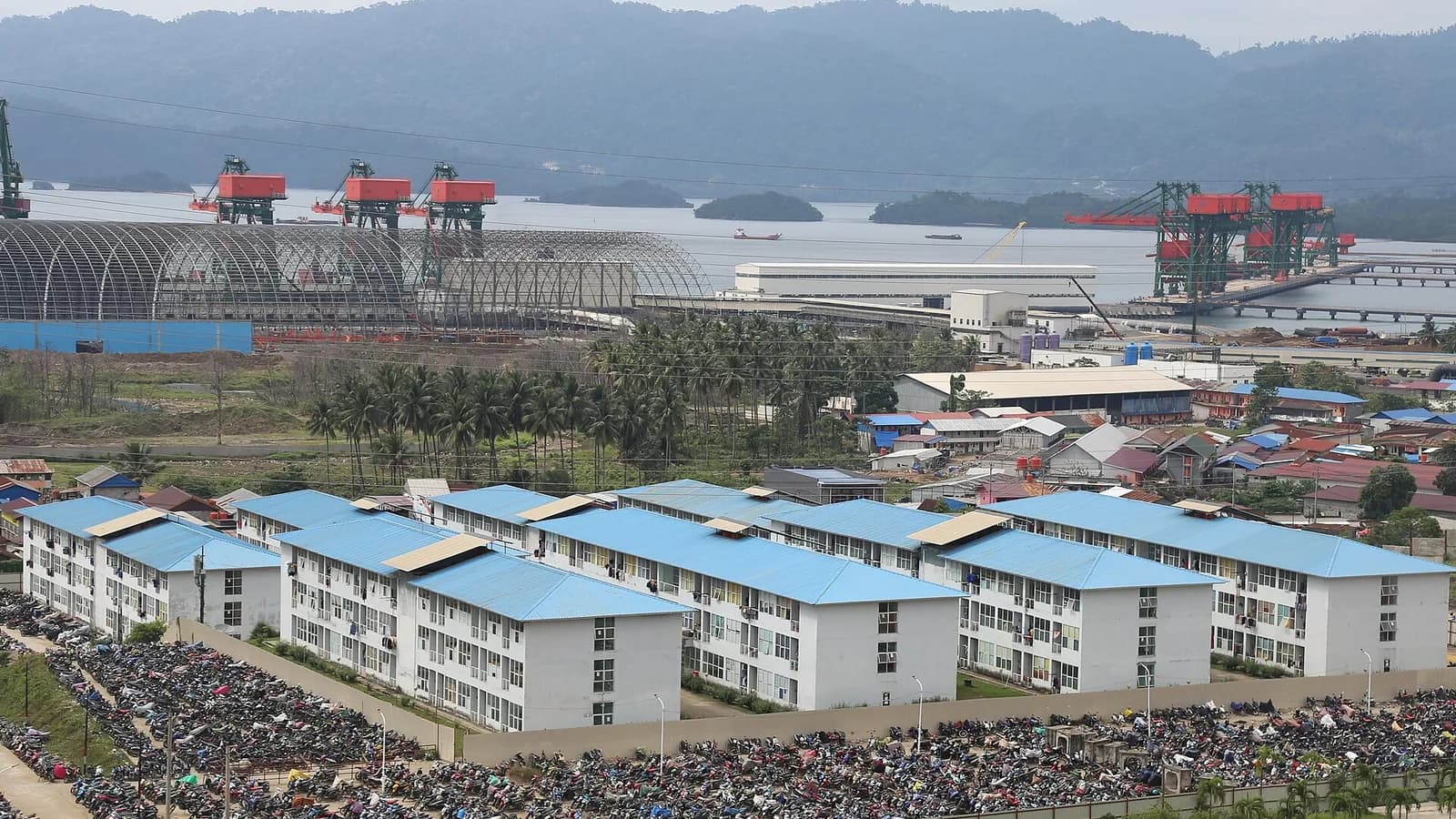
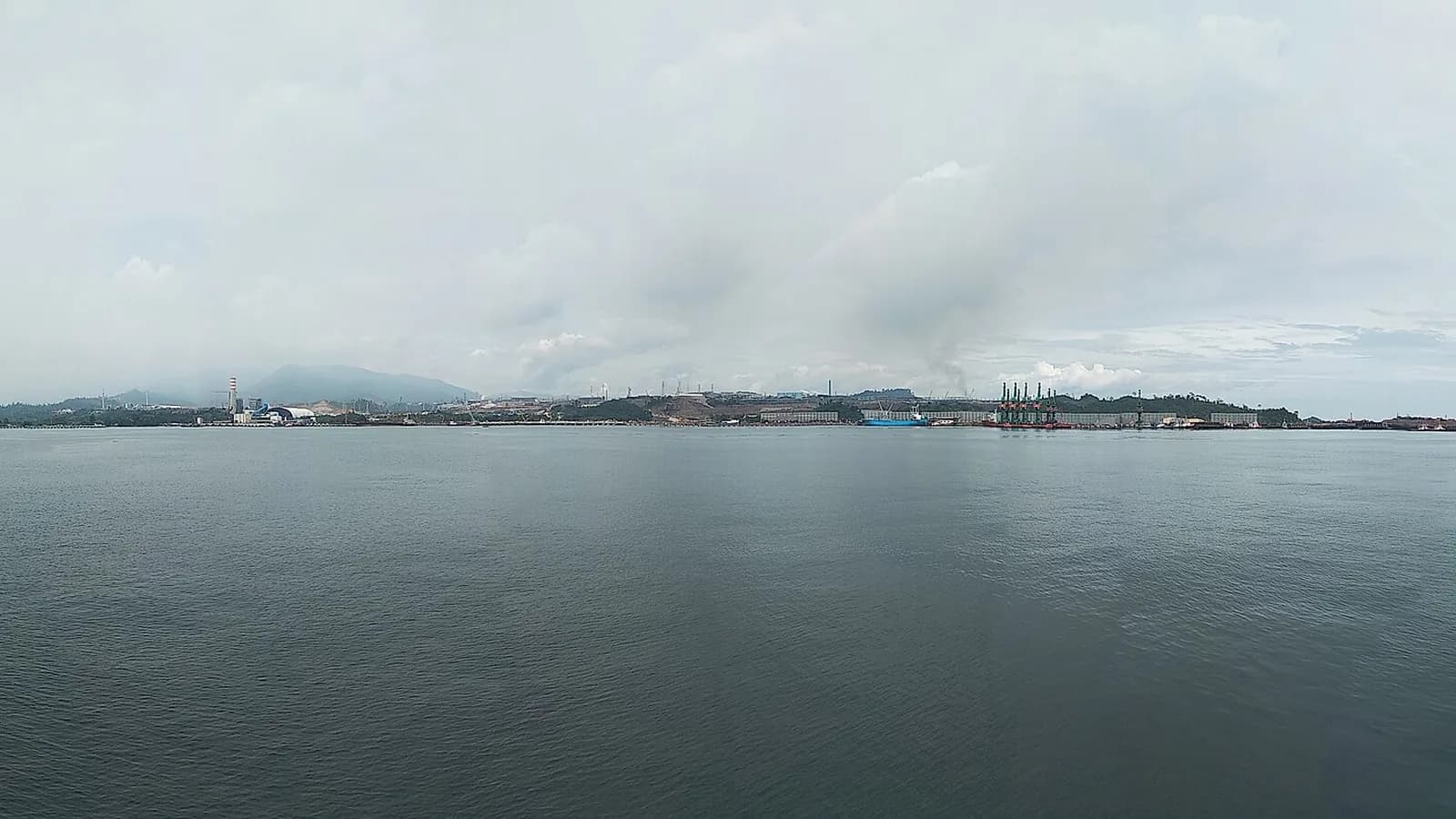
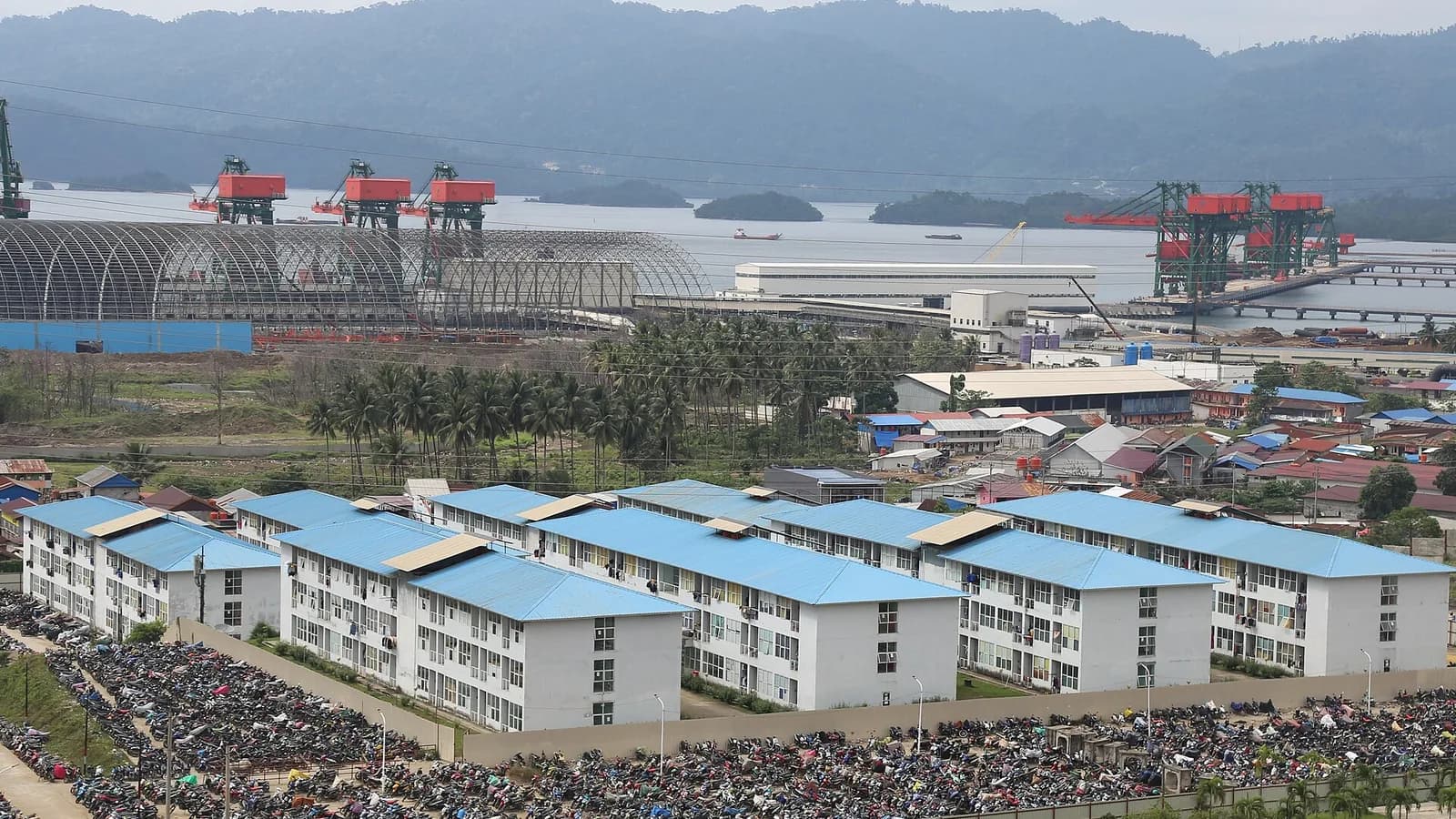
The pattern is visible in Indonesia's nickel build-out. A high-pressure acid leach (HPAL) plant under construction in Sulawesi was financed with debt structured as senior secured and non-recourse, raised from a syndicate of Indonesian and regional banks, on a seven-year term with a balloon at maturity and no repayments due in the first years — a profile matched to the plant's ramp-up rather than to a conventional corporate loan. The plant's feed is secured on the other side by a long-term supply agreement for laterite ore from the sponsor's own mine, and the facility sits inside an established industrial park. Production is fed to the plant by pipeline from the mine's ore-preparation facility.
Read the shape of that, and the logic of Indonesian project finance is clear. The trader or processor secures the material; the lender secures the cash flows and the shares; the sponsor secures the ore body. Each participant holds a different piece of the same chain, and the financing is the set of contracts that lines them up. (Financing structure as reported by World-Energy, reprinting Mining-Technology, 2 March 2025; figures for the transaction are stated in the source and are not repeated here.)
The divestment clock
The most Indonesia-specific variable in the capital structure is the divestment obligation, and it is set out in detail in PP 96/2021, Article 147. A business entity that holds an IUP or IUPK at the production-operation stage and was established in the framework of foreign investment must divest at least 51 percent of its shares, progressively, to the central government, regional governments, state-owned enterprises, regional-owned enterprises, and/or a national private business entity.
The schedule is measured from the start of production, and it differs by mining method and by whether the operation is integrated with processing or refining. The six steps are the same in each case — 5, 10, 15, 20, 30, and 51 percent — but the year each step falls due moves with the configuration:
| Method and configuration | 5% | 10% | 15% | 20% | 30% | 51% |
|---|---|---|---|---|---|---|
| Open pit, not integrated with processing/refining | yr 10 | yr 11 | yr 12 | yr 13 | yr 14 | yr 15 |
| Open pit, integrated | yr 15 | yr 16 | yr 17 | yr 18 | yr 19 | yr 20 |
| Underground, not integrated | yr 15 | yr 16 | yr 17 | yr 18 | yr 19 | yr 20 |
| Underground, integrated | yr 20 | yr 21 | yr 22 | yr 23 | yr 24 | yr 25 |
The route by which those shares change hands is regulated too. The shares must first be offered directly to the central government, then to the provincial and regency or city governments, then to SOEs, then to regional-owned enterprises; if none is interested, they are offered to a national private entity by auction, and if that fails, through the Indonesian stock exchange (Article 147). An anti-dilution rule prevents a later capital increase from shrinking the divested stake below the scheduled amount, and Article 148 lets a holder more than 49 percent owned by foreigners transfer foreign shares before the schedule falls due — but only after first offering them to an SOE, which has 75 days to respond, and thereafter with ministerial approval.
Two points about the instrument. First, PP 96/2021 has been amended — by Government Regulation No. 25 of 2024 — but that amendment does not touch Articles 147 to 149; the divestment schedule and the transfer route stand as set out above. Second, the schedule is a floor and a timetable, not a formula for the price: it says how much must move and by when, not at what value, which is why the transaction terms are negotiated rather than applied.
What a financier asks for
The list below is Teramine's own framework — analytical guidance drawn from how these transactions are structured in the sources above, not a sourced checklist, and not legal advice. It is the sequence a lender or a strategic investor will work through before commercial terms are worth negotiating.
- The licence. Type (IUP or IUPK), commodity, stage, holder, issuing authority and expiry — and whether the holder is legally capable of holding it, which for a foreign party means a proper Indonesian vehicle.
- The share register and the divestment schedule. Who owns the project company today, and what the route to 51 percent domestic ownership implies for control, board seats and future funding rounds.
- The security that can actually be perfected. Shares, receivables, insurance proceeds, accounts, plant and land — and the recognition that the permit itself is not mortgageable. Which documents can be registered, and within what window.
- Land and title. Whether the site carries a mortgageable title, and the underlying arrangements with the government over the ground.
- The study. A feasibility study, and resource and reserve reporting a lender can rely on rather than a vendor's number.
- The offtake. Term, volume, pricing basis and counterparty — because a prepayment may be the first capital in and the security for the rest.
- Permits and plans. Environmental approval, reclamation and post-mining obligations, and the annual work plan and budget (RKAB) that governs what the mine may actually produce.
- Enforceability. Governing law, an arbitration clause seated under the New York Convention, and security documents governed by Indonesian law.
- Cross-border mechanics. The offshore-loan reporting to Bank Indonesia and the Ministry of Finance, and the withholding-tax position on interest paid abroad.
- The lender's own limits. Not every institution can lend in the currency and tenor a project needs, and the guarantee restrictions on state entities close one route entirely.
What this means for an investor
- Bankability starts with the permit and the vehicle. A clean licence held by a properly established Indonesian company is the precondition for every other piece of the stack.
- The security is corporate, not mineral. Because the permit cannot be mortgaged, a lender's grip runs through the shareholding and the cash flows — which is why the share register and the divestment question are a lender's questions, not only the shareholder's.
- Match tenor to the divestment clock. Where a project is foreign-held, the equity will step down on a schedule set in years from production. Structure debt and shareholder arrangements with that timetable in view.
- Offtake can precede a bank. A prepayment from a buyer of the product is a real, and often first, source of construction capital.
- A foreign lender's remedy runs through arbitration. Foreign judgments are not enforceable in Indonesia; plan the dispute route accordingly.
Catatan Teramine
This section is Teramine's editorial assessment. It is not legal advice, and it is not a statement from ABNR, from the Ministry of Energy and Mineral Resources, or from any bank or company named above.
Read the three constraints together and the shape of a bankable Indonesian mining project falls out. The licence is the value; the state keeps the mineral; the security law forces a lender to take the company rather than the ground; and the divestment schedule means the ownership of that company is designed to change. A financing that models only cash flows and reserves — and not the permit, the security package and the divestment clock — is missing the three features that are specific to this jurisdiction.
The practical consequence is about sequencing. In most jurisdictions the equity structure is settled first and the permits follow. In Indonesia the permit is the thing that determines who may hold the equity, what can be charged as security, and when the shareholding must move. So the corporate and permit work is not an administrative tail to the financing; it is the front end of it. An investor who brings a term sheet before the licence and the vehicle are in order will be asked to go back to the beginning.
For the permit work that sits behind any of this — IUP and IUPK applications, RKAB, and the operating documents a project must hold — see [mining permit services](/en/layanan-izin). Indonesian mining projects and assets offered for take over, joint venture and joint operation are listed on the [mining marketplace](/en/marketplace), each with its commodity, location and scheme stated.
Related reading on this site: [IUP vs IUPK](/en/news/iup-vs-iupk) for what separates the two operating licences; [Foreign Ownership in Indonesian Mining](/en/news/foreign-ownership-indonesian-mining) for the divestment obligation as it played out at a named company; [Mining Joint Venture in Indonesia](/en/news/mining-joint-venture-indonesia) for the structures that move a licence or a company; [How to Buy a Mine in Indonesia](/en/news/how-to-buy-a-mine-in-indonesia) for the diligence sequence; and [Nickel Smelter Indonesia](/en/news/nickel-smelter-indonesia) for the processing build-out this financing serves.
Sources
The documents below were opened and read for this article. Where a statement is attributed in the text to the ABNR chapter, to PP 96/2021 or to the nickel-financing report, that is the source it came from. Note that the ABNR chapter is a general project-finance survey, not a mining-specific text: the licence and divestment provisions above come from PP 96/2021, and the project-finance structure, security and enforcement provisions from the ABNR chapter.
- Chambers Global Practice Guides — Project Finance 2023: Indonesia: Law & Practice, by Emir Nurmansyah, Serafina M Hayu, Ammalia Putri and Maher Sasongko, ABNR Counsellors at Law, published by Chambers and Partners, 2023. Used for: the sponsor and lender structure and the project company as an Indonesian limited liability company; non-recourse and limited recourse debt, the typically 75:25 debt-to-equity ratio, bank loans offshore or onshore, and the growing use of corporate and project bonds, securitisation and green bonds; the active-sector list including smelting, electric cars and batteries; the closed list of in rem security interests (mortgage/hak tanggungan, fiduciary security/fiducia, pledge) and the absence of floating charges; the assets typically secured and the instrument taken over each; the 30-day fiducia registration rule and the electronic land-mortgage system; the treatment of a licence as a power of attorney to manage business; the generally unrestricted position of foreign lenders, the restriction under Presidential Decree No. 59 of 1972 on state-owned and regional-owned entities, and the World Bank negative pledge; the non-recognition of the security trust and the use of a security agent; the reporting of financing agreements to Bank Indonesia and the Minister of Finance and the Indonesian-language requirement; the withholding-tax position on payments to lenders; enforcement by public auction or private sale, the position on foreign court judgments, and the enforceability of foreign arbitral awards under the New York Convention; and the foreign-law/Indonesian-law split in governing law. Read in full text on 2 October 2026.
- Government Regulation of the Republic of Indonesia No. 96 of 2021 on the Implementation of Mineral and Coal Mining Business Activities (Lembaran Negara RI Tahun 2021 No. 208), official salinan published by the Ministry of Energy and Mineral Resources' legal database, JDIH ESDM. Used for: Article 147 — the obligation on a foreign-investment business entity holding an IUP or IUPK at the production-operation stage to divest at least 51 percent of its shares progressively to the central government, regional governments, state-owned enterprises, regional-owned enterprises and/or a national private entity; the divestment schedule by mining method and integration (open pit not integrated: 5, 10, 15, 20, 30 and 51 percent in years 10 to 15 from production; open pit integrated and underground not integrated: the same steps in years 15 to 20; underground integrated: the same steps in years 20 to 25); the order of offer and the auction and stock-exchange fallback; the anti-dilution rule; Article 148 — the pre-schedule transfer of foreign shares by a holder more than 49 percent foreign-owned, with a first offer to an SOE and a 75-day response window; and Article 149 — delegation of further procedure to a ministerial regulation. Read 2 October 2026.
- Government Regulation of the Republic of Indonesia No. 25 of 2024 on the Amendment of Government Regulation No. 96 of 2021, JDIH Kementerian ESDM. Used to confirm that Articles 147 to 149 of PP 96/2021 are not among the provisions amended; the amendment list does not include them. Read 2 October 2026.
- World-Energy, "Merdeka Battery Secures $1.4bn Financing for Nickel Plant in Indonesia", 2 March 2025 (article credited to Mining-Technology). Used for the structure of the Sulawesi nickel-plant financing: senior secured, non-recourse debt from a syndicate of Indonesian and regional banks; a seven-year term with a balloon payment and no repayments due until 2027; a 20-year laterite ore supply agreement from the sponsor's own mine; and the plant's location within the Indonesia Morowali Industrial Park. The transaction's figures are stated in the source and are not relied on here. Read 2 October 2026.