Investing in Indonesian Nickel Mining: What International Investors Should Know

By Teramine EditorialPublished 26 September 20265 min read
Investing in Indonesian Nickel Mining: What International Investors Should Know

Indonesia is the world's largest nickel producer and the centre of the EV battery supply chain. Here is how foreign investors approach Indonesian nickel projects — and what to verify before committing capital.

Why Indonesian Nickel Matters

Indonesia is the world's largest producer of nickel, and the metal has become one of the most strategically important commodities in the global energy transition because it is a core input for lithium-ion battery cathodes.

That position was built deliberately. Indonesia restricted raw ore exports and required domestic processing, a policy known as *hilirisasi*, which moved a large share of smelting and refining onshore. The result is that decisions made in Jakarta about permits, export rules and royalty rates now affect battery supply chains worldwide.

What "Indonesian Nickel" Actually Covers

Nickel projects in Indonesia are not one thing. Investors encounter at least three distinct types, and they carry very different risk profiles:

  • Laterite ore operations — the bulk of Indonesian output, typically open-pit, concentrated in Sulawesi and Halmahera.
  • Processing and smelting assets — rotary kiln electric furnace and high-pressure acid leach facilities, which convert ore into products usable by battery makers.
  • Exploration-stage concessions — earlier, cheaper to enter, and dependent on further drilling before any production decision.

Understanding which of these a project is, matters more than its headline land area.

The Permit Question Comes First

In Indonesia, the asset is the licence. Before commercial terms are worth discussing, an investor needs clarity on the permit type — IUP for a domestic entity, IUPK for a contract-of-work area — the commodity it covers, the exploration versus production stage, the expiry date, and whether the holder is a foreign-owned entity.

A concession without a clean, current permit is a legal exposure, not a mining project.

Diligence That Actually Reduces Risk

  • Verify the licence directly at the issuing authority rather than relying on a scanned copy.
  • Check the company structure — local ownership requirements apply to mining businesses, and a chain of nominees is a common source of later disputes.
  • Confirm the geology independently. Reserve and grade figures should come from a JORC-standard report, not from a sale document.
  • Test the numbers against the environment. Transport distance to a port, power supply and water access decide whether a deposit is economic far more often than grade does.
  • Establish the social and environmental position. Land status, community agreements and reclamation obligations are material, not administrative.

Where Teramine Fits

Teramine lists Indonesian mining opportunities — including nickel — that are offered for take over, joint operation and joint venture. Each listing states the commodity, the location and the commercial scheme, and investors can enquire directly to obtain the underlying documents.

We do not publish reserve estimates we have not seen evidence for, and we do not aggregate figures across projects.

Next Step

If you are assessing Indonesian nickel, start with the permit and the geology. Everything else is negotiable; those two are not.

Browse the nickel opportunities currently listed on Teramine, or speak to our team about a specific project.
NickelInvestmentIndonesiaIUPEV battery
Share

Related Mining Opportunities

Mining projects currently offered on Teramine for this commodity.

Browse Mining Opportunities

Looking for mining investment opportunities in Indonesia?

Browse IUP projects available for take over, joint operation and joint venture on Teramine.

Explore Mining Opportunities

Own a mining asset or project?

Publish your mining opportunity to Teramine's investor network.

Submit Mining Opportunity

Ada Pertanyaan?

Konsultasi gratis dengan tim ahli kami

Hubungi Kami

Related Articles

Indonesia's Downstreaming Phase 2: EV Batteries, BESS, and the New Coordinating Ministry Behind Them
Mining InvestmentNews

Indonesia's Downstreaming Phase 2: EV Batteries, BESS, and the New Coordinating Ministry Behind Them

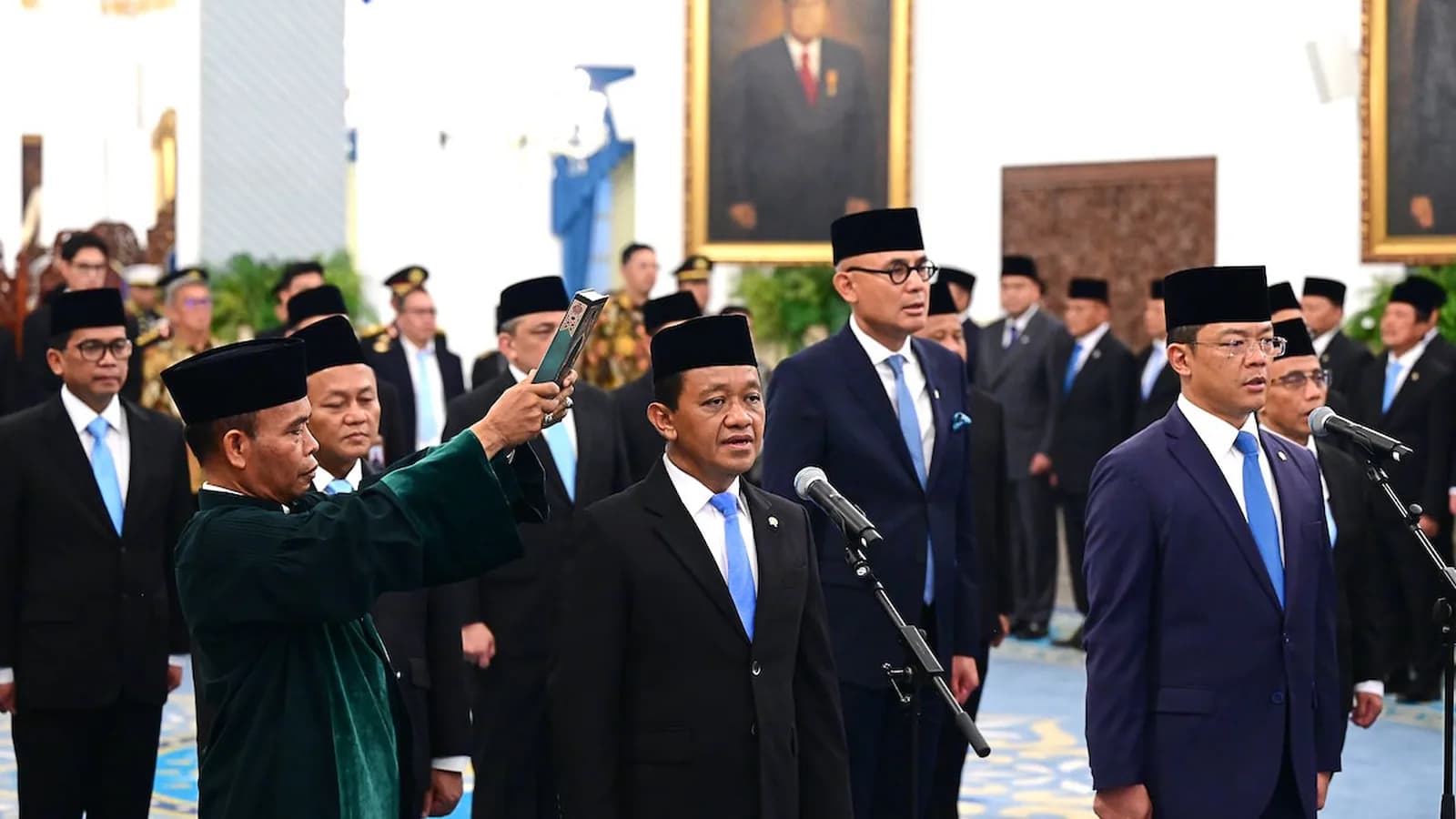
Indonesia's Investment and Downstreaming Ministry has put a second phase on the table: moving past smelters toward EV batteries, battery energy storage and higher-value manufacturing, under a roadmap of 28 strategic commodities and US$618.1 billion of investment to 2040. On 1 October 2026, President Prabowo placed downstreaming and the energy transition under a single coordinating ministry led by Bahlil Lahadalia. Here is what the government said, and what a foreign investor should take from it.

3 Oct 20268 min read
NickelCritical Minerals
Indonesia's Mineral Downstreaming: The Processing Capacity Being Built, Commodity by Commodity
Mining InvestmentMining Intelligence

Indonesia's Mineral Downstreaming: The Processing Capacity Being Built, Commodity by Commodity

Indonesia's downstreaming roadmap runs to 2045; the plant on the ground is narrower and countable. ESDM's own count as of 2024 is 131 nickel smelters at some stage of delivery demanding 438.3 million tonnes of ore a year, three world-class copper smelters heading for about 1 million tonnes of cathode capacity, eight alumina refineries and aluminium smelters still under construction, and a copper fleet expected to yield lead as a by-product. This is the capacity, commodity by commodity, and the ore arithmetic under it.

30 Sep 20269 min read
NickelCopperBauxite
Nickel Smelters in Indonesia: Routes, Capacity and the Ore Constraint
Mining InvestmentMining Intelligence

Nickel Smelters in Indonesia: Routes, Capacity and the Ore Constraint

USGS records 44 Class II nickel smelters in Indonesia consuming 210 million tonnes a year of saprolite in 2023, against three HPAL plants consuming almost 24 million tonnes of limonite. Output is dominated by nickel pig iron — 1.39 million tonnes of nickel content that year, about eight times the mixed hydroxide precipitate. Here is the plant, route by route, and the ore arithmetic behind the plan to stop building more of the first kind.

29 Sep 202612 min read
Nickel